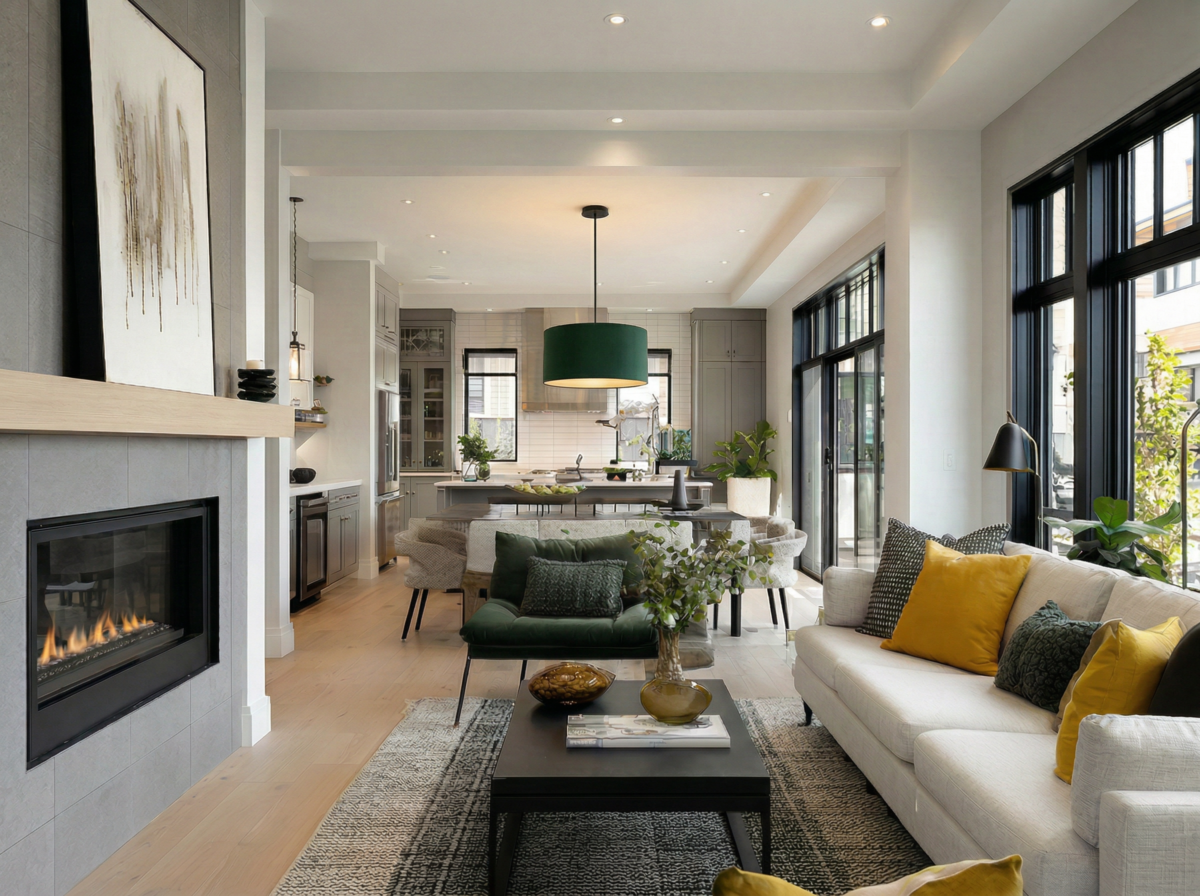
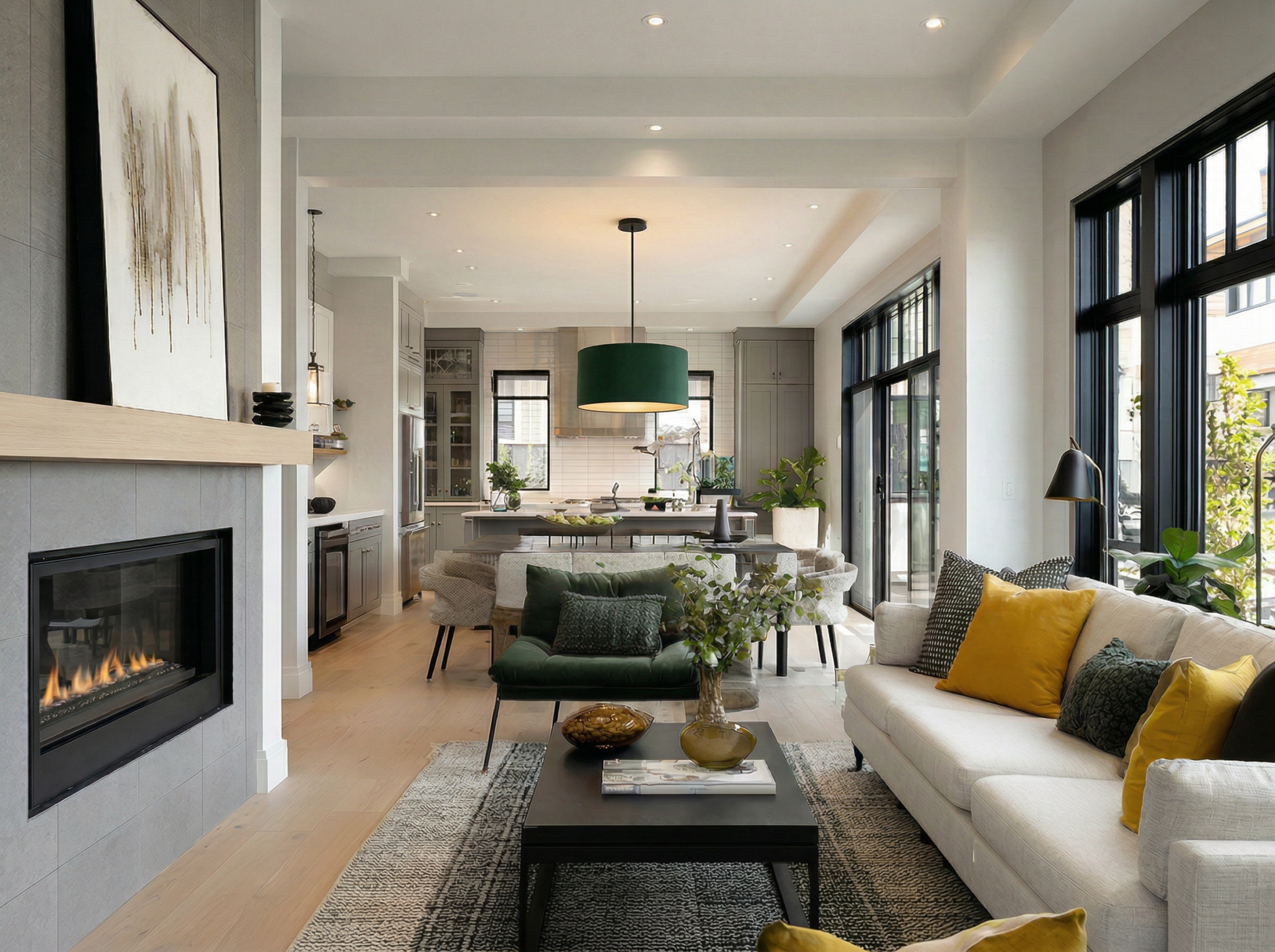
A cohesive open concept main floor uses consistent colours and materials to create visual harmony.
This Image is an AI Rendering Created by Julie McNicol
Many homeowners reach a point where their home feels almost right — yet something still feels slightly off. Perhaps the living room looks beautiful on its own, but it doesn’t quite connect with the dining space. Maybe each room was decorated at a different time, with different inspiration, leaving the overall home feeling a bit fragmented rather than harmonious.
This is an incredibly common experience, especially in homes that have evolved gradually over time. Renovations, furniture purchases, and décor updates often happen in stages, which can unintentionally create spaces that feel disconnected from one another.
From a designer’s perspective, the goal isn’t to make every room look identical. Instead, it’s about creating a sense of flow and continuity, so the entire home feels calm, intentional, and visually balanced. A cohesive interior design allows each room to have its own personality while still feeling part of a thoughtfully curated whole.
In this article, we’ll explore how to make your home feel cohesive using practical interior design strategies — from choosing the right colour palette to layering textures, refining lighting, and adding the finishing details that bring everything together.
Why Homes Sometimes Feel Disconnected
One of the biggest reasons a home feels disjointed is that decorating decisions were made in isolation. It’s easy to fall in love with a beautiful sofa, rug, or piece of artwork without considering how it relates to the rest of the home.
Over time, these individual choices can create rooms that feel stylistically different from one another. For example, a modern kitchen may open into a traditional living room, or a minimalist hallway may lead into a heavily decorated bedroom. None of these elements are necessarily wrong — but without thoughtful connections between them, the home can feel visually fragmented.
Another common issue is inconsistent colour choices. When every room has an entirely different palette, the eye doesn’t experience a natural flow from one space to the next. This doesn’t mean every room needs to match, but there should be subtle visual threads connecting them.
Finally, clutter and unfinished styling can contribute to a lack of cohesion. Even beautifully designed homes can feel incomplete if accessories, lighting, or artwork haven’t been thoughtfully layered into the space.
The good news is that cohesive interior design doesn’t require starting over. Often, small adjustments — particularly with colour, materials, and lighting — can dramatically transform how unified a home feels.
The Role of a Consistent Colour Palette
Colour is one of the most powerful tools when learning how to make your home feel cohesive.
Designers often begin with a whole-home colour palette, which acts as the visual foundation for every room. Rather than selecting entirely different colours for each space, the goal is to create a palette of complementary tones that can repeat throughout the home.
A simple and effective approach is the 60–30–10 principle:
- 60% dominant colour – typically walls or large furnishings
- 30% secondary colour – upholstery, rugs, or curtains
- 10% accent colour – accessories, artwork, or decorative objects
For example, a warm neutral base might appear on walls throughout the home, while deeper tones such as charcoal, navy, or olive appear in furnishings and accents.
This repetition creates subtle continuity. As you move from room to room, the colours feel familiar rather than jarring.
Another helpful technique is echoing colours across spaces. If a rust tone appears in the living room rug, you might see that same tone reappears in a throw pillow in the family room or artwork in the hallway.
These small repetitions quietly connect rooms together — one of the most effective interior design tips professionals use to create harmony.

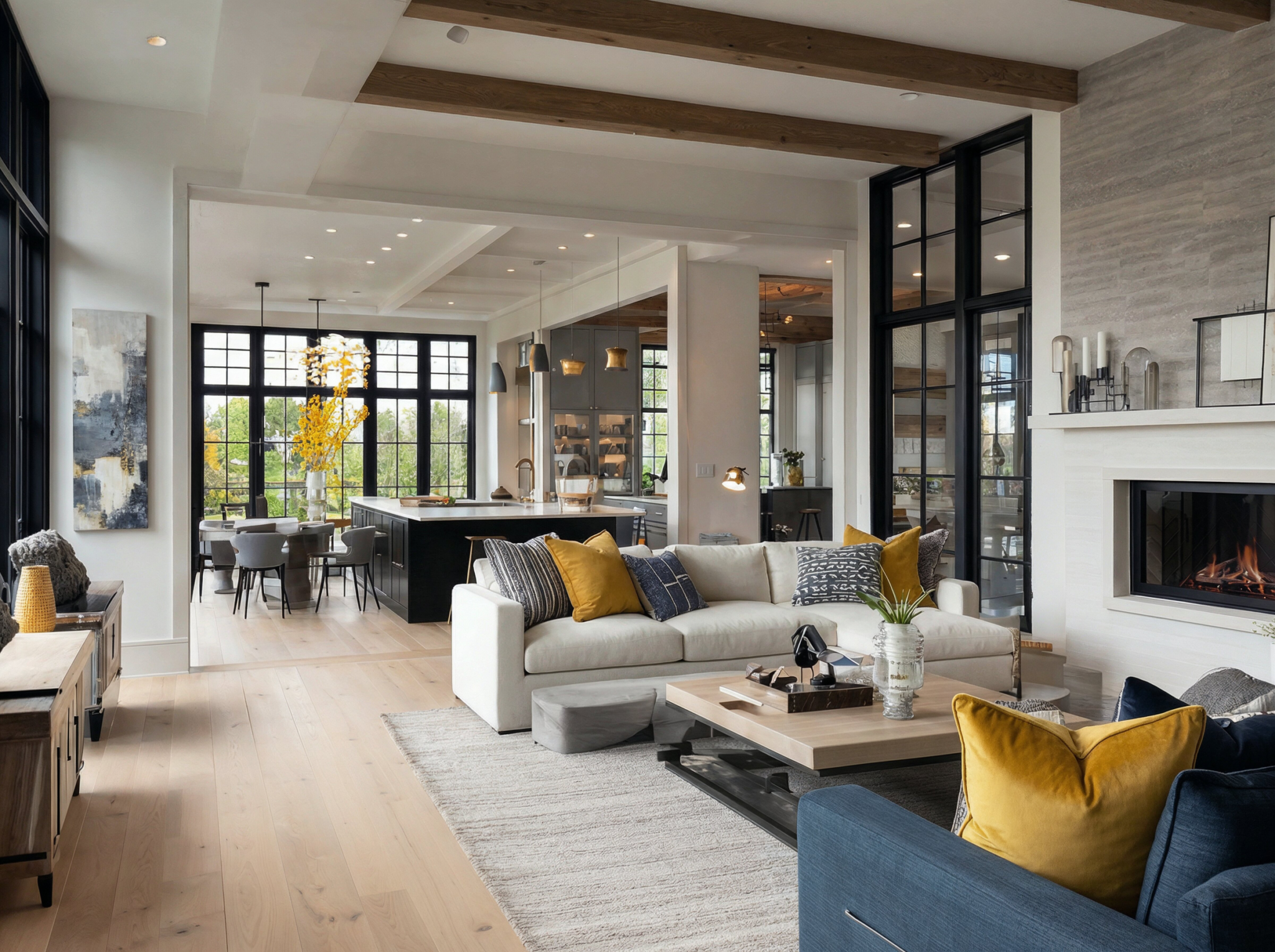
A consistent colour palette helps connect spaces throughout the home. In this example, a beige colour is the dominant colour, blue is the secondary colour, and yellow is the accent colour.
This Image is an AI Rendering Created by Julie McNicol
Layering Textures and Materials for Depth
While colour creates continuity, texture and materials add richness and balance.
A home that uses only one or two materials can feel flat. On the other hand, when too many unrelated materials appear in a space, the result can feel chaotic. The goal is thoughtful layering.
Designers often combine materials such as:
- Natural wood
- Stone or marble
- Linen and cotton textiles
- Leather upholstery
- Soft wool rugs
- Metal accents (brass, bronze, or blackened steel)
The key to cohesive interior design is repeating these materials throughout the home.

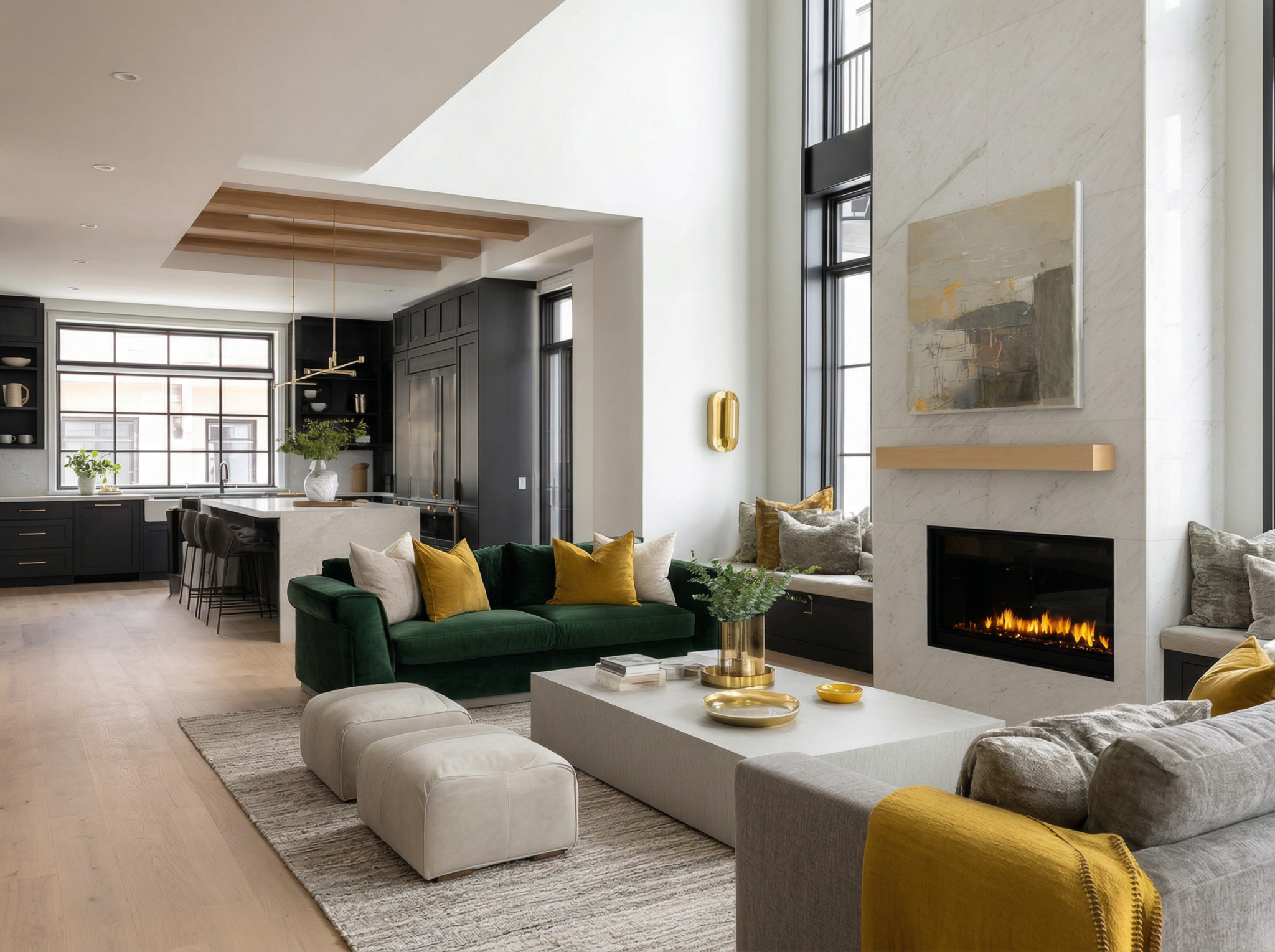
A consistent use of materials helps connect spaces throughout the home. The kitchen counters and fireplace stone are similar, the wood mantel and ceiling beams are a close match to the flooring, and gold metals are used throughout the space.
This Image is an AI Rendering Created by Julie McNicol
For instance, if brushed brass appears in kitchen cabinet hardware, it might also appear in lighting fixtures or decorative objects elsewhere in the home. Similarly, wood tones in flooring might be echoed in furniture pieces or shelving.
Texture also plays an important role in making a home feel comfortable and complete. A linen sofa layered with wool throws, textured cushions, and a soft rug instantly adds warmth and visual interest.
When materials repeat in subtle ways, the entire home begins to feel more intentional and balanced.
Lighting That Transforms Rooms
Lighting is one of the most overlooked elements when homeowners consider how to decorate your home, yet it has an enormous impact on how cohesive a space feels.
Professional designers rarely rely on a single overhead fixture. Instead, they layer lighting to create warmth, dimension, and visual connection between rooms.
There are typically three layers of lighting:
Ambient lighting
This is the general lighting in a room — often ceiling fixtures or recessed lights.
Task lighting
Focused lighting used for specific activities such as reading, cooking, or working.
Accent lighting
Decorative lighting used to highlight architectural details, artwork, or textures.
When these layers work together, the room feels balanced and inviting rather than flat or harsh.

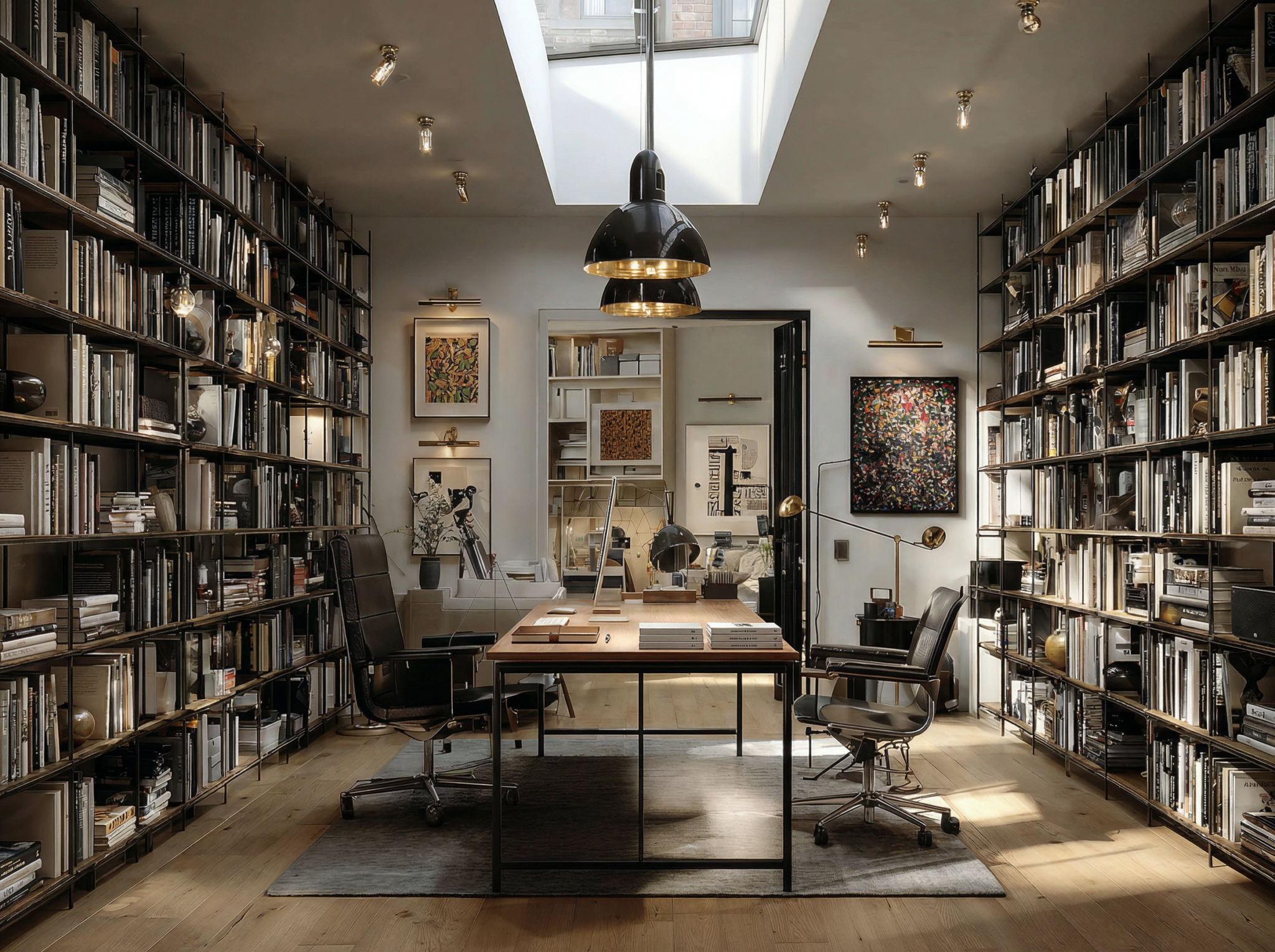
In this office, spotlights and the skylight provide ambient light, the pendants and a desk lamp provide task lighting, and picture lights and sconces provide accent lighting.
This Image is an AI Rendering Created by Julie McNicol
Consistency in fixture finishes also contributes to cohesion. For example, repeating matte black, aged brass, or polished nickel across lighting fixtures throughout the home helps visually tie spaces together.
Additionally, warm light temperatures (around 2700K–3000K) tend to create a calm, welcoming atmosphere — a subtle detail that can dramatically change how a home feels.
Finishing Details That Make a Home Feel Complete
Often, the difference between a home that feels “almost done” and one that feels polished comes down to the finishing details.
Accessories, artwork, and styling elements add personality while reinforcing the overall design story.
Some of the most effective finishing touches include:
Artwork
Art can connect colour palettes across rooms and add visual interest to walls.
Textiles
Throw pillows, blankets, and window treatments soften a space and introduce additional texture.
Books and objects
Styled shelves and coffee tables create character and depth.
Plants and natural elements
Greenery adds life, softness, and organic contrast.

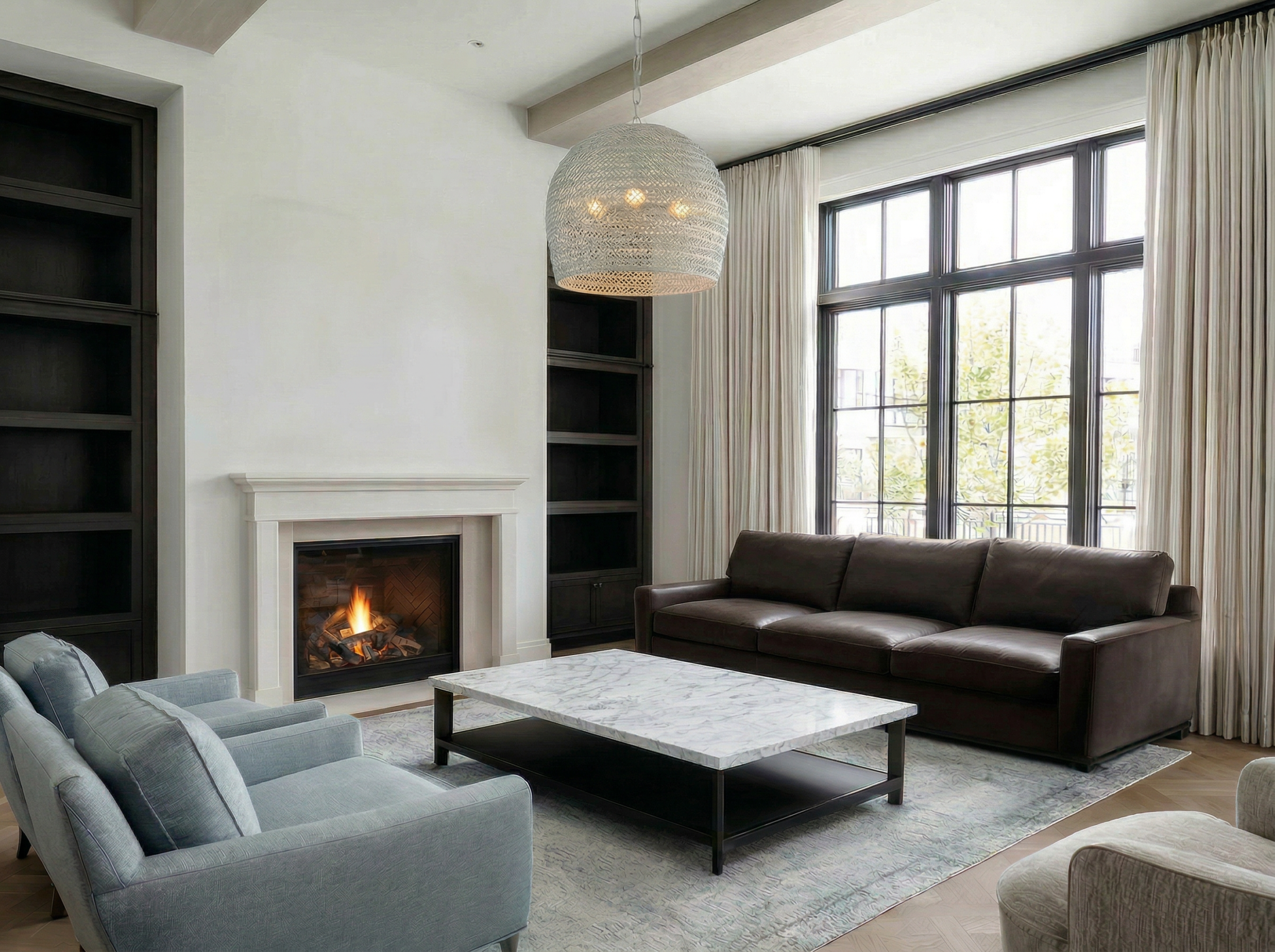
Thoughtful finishing details help a room feel polished and complete. The image on the left feels empty and incomplete.
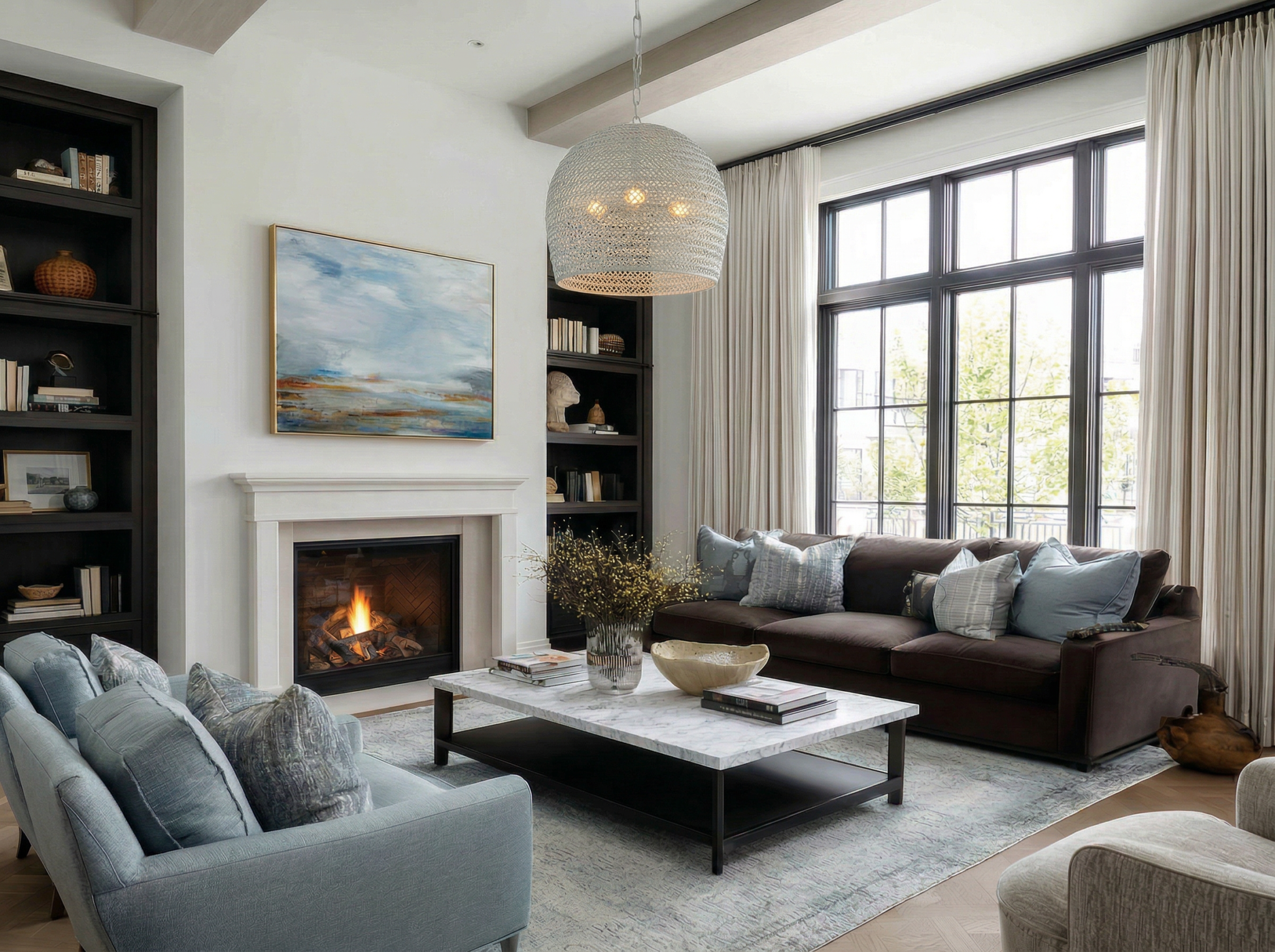
The accessories, toss pillows and artwork in the image on the right, helps this same room feel polished and complete.
This Image is an AI Rendering Created by Julie McNicol
When these elements are thoughtfully selected and repeated throughout the home, they help reinforce cohesion without feeling forced.
A carefully styled home doesn’t feel overly decorated — it simply feels complete.
Designer’s Perspective
In my experience, the most successful homes are designed with a whole-home vision from the start. Even when rooms are completed in phases, having a clear plan for colour palettes, materials, and lighting ensures that everything ultimately works together.
One approach I often recommend is creating a simple design roadmap before making major purchases. This might include selecting a few key colours, identifying preferred materials, and choosing consistent finishes for hardware and lighting.
When those foundational decisions are made early, decorating becomes much easier — and the home naturally evolves into a cohesive, calm environment.
Quick Checklist for Homeowners
If you want to make your home feel more cohesive, keep these principles in mind:
- Choose a whole-home colour palette with complementary tones
- Repeat key colours across multiple rooms
- Layer different textures like wood, linen, wool, and metal
- Maintain consistent lighting finishes throughout the home
- Use layered lighting instead of relying only on ceiling fixtures
- Incorporate artwork and décor that connects your colour palette
- Repeat materials subtly to create visual continuity
- Add plants and natural elements for warmth and balance
FAQ Section
How do you make a house feel cohesive?
A cohesive home uses consistent elements throughout the space, such as a shared colour palette, repeated materials, and complementary furniture styles. Small details like matching lighting finishes and recurring accent colours help rooms feel connected without looking identical.
What is cohesive interior design?
Cohesive interior design refers to creating a unified visual style across multiple rooms in a home. This is achieved through consistent colours, materials, textures, and design elements that create flow and harmony.
Do all rooms need to match to feel cohesive?
No. Rooms should have their own personality, but they should share common design elements. Repeating colours, materials, or finishes helps maintain continuity while allowing each space to feel unique.
What is the easiest way to make a home feel more pulled together?
Start with a consistent colour palette and repeat it throughout the home. Adding coordinated textiles, artwork, and lighting can also quickly improve cohesion.
How can lighting improve interior design?
Lighting adds depth, warmth, and functionality to a space. Layering ambient, task, and accent lighting helps rooms feel balanced while highlighting architectural features and décor.
Need more Help? Get in touch!
A well-designed living room should feel comfortable, welcoming, and effortless to live in. Often, a thoughtful layout is all it takes to transform a space that feels slightly awkward into one that truly works for your home and lifestyle.
If you’re planning a renovation or simply want to improve how your living room functions, exploring professional design guidance can make the process much easier. You’re always welcome to browse our portfolio for inspiration or book a consultation to discuss how a tailored layout can bring your space together beautifully.