Why Your Living Room Still Doesn’t Feel “Right” (And How Designers Fix It)
This Image is an AI Rendering Created by Julie McNicol
Why Your Living Room Still Doesn’t Feel “Right” (And How Designers Fix It)
Many homeowners renovate their living room with beautiful furniture, fresh paint, and carefully chosen décor—yet something still feels slightly off. The room might look good, but it doesn’t quite feel comfortable, balanced, or easy to live in.
This is one of the most common concerns clients share during a design consultation. Often, the issue isn’t the furniture itself. It’s the layout—how everything relates to the room, to each other, and to how people actually move through the space.
An effective layout is the quiet foundation of great design. When done well, the room feels natural, welcoming, and effortlessly functional. When it’s not quite right, the space can feel awkward, cramped, or unfinished even when everything in it is beautiful.
In this article, we’ll explore practical living room layout ideas, explain how to arrange living room furniture more effectively, and share professional living room design tips that interior designers use to create spaces that feel balanced, comfortable, and timeless.
Why Living Rooms Often Feel Awkward
A living room is one of the most complex spaces in the home. It has to accommodate conversation, relaxation, entertainment, circulation, and sometimes even work or reading. When a layout doesn’t support these functions, the room begins to feel uncomfortable—even if the design itself is attractive.
One common issue is that many homeowners start with furniture placement based on walls rather than how the room is used. Sofas get pushed against the perimeter, chairs float without purpose, and the seating arrangement ends up feeling disconnected.
Another factor is circulation. People need clear paths to move through the room without weaving between coffee tables and chairs. When these pathways aren’t considered, the room can feel cramped or chaotic.
Focal points also play a significant role. Every well-designed living room needs a visual anchor—often a fireplace, window, or media wall. When furniture isn’t oriented toward a clear focal point, the room lacks direction.
These subtle issues often explain why a room doesn’t quite feel finished. Good living room layout ideas solve these problems by creating structure, balance, and a natural flow.
The Most Common Living Room Layout Mistakes
Even beautifully furnished living rooms can struggle with a few surprisingly common layout mistakes.
Pushing all furniture against the walls is perhaps the most frequent. While it may seem like it creates more space, it often has the opposite effect. If the room is large, the seating ends up too far away for it to feel cozy and be functional. Pulling seating slightly inward usually creates a more inviting conversation area.
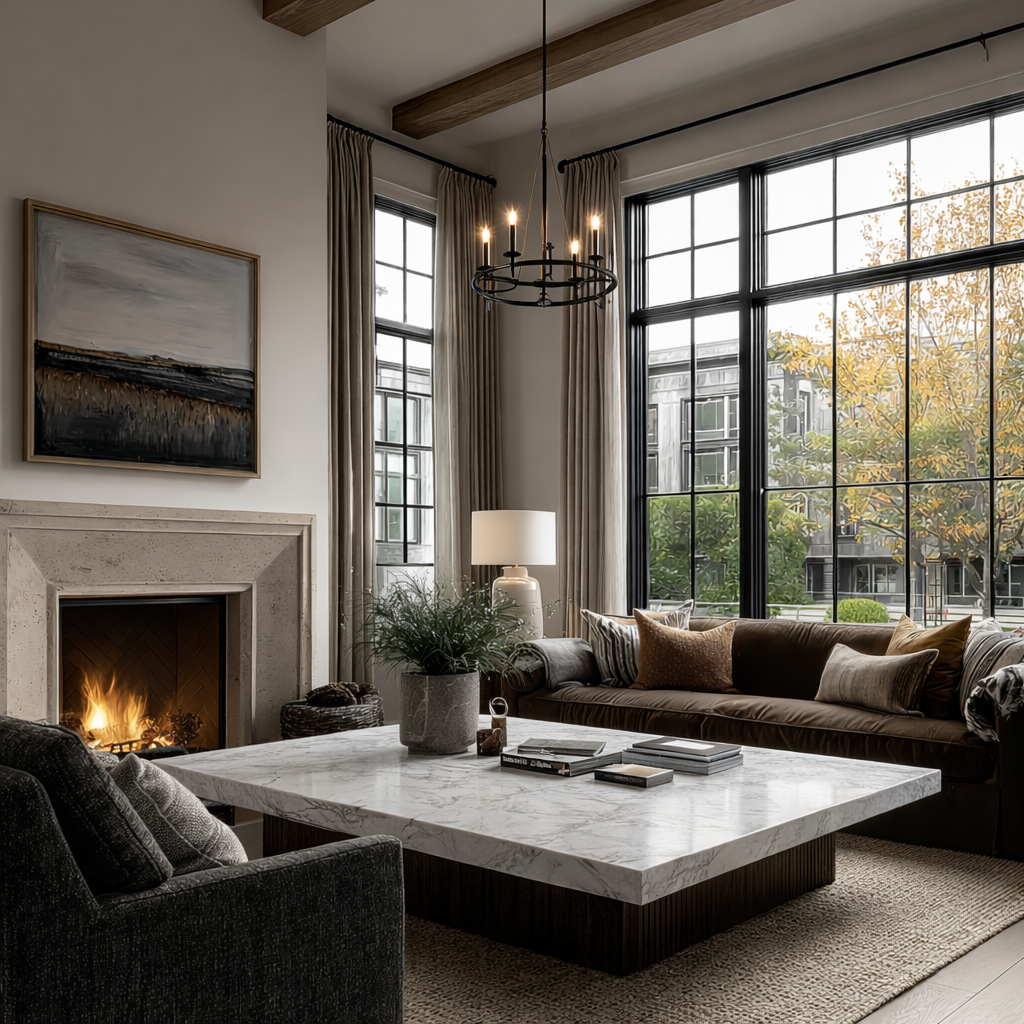
Another mistake is choosing the wrong size rug. A rug that’s too small can make the furniture feel disconnected. At least the front legs of major seating pieces should sit on the rug to visually anchor the arrangement. Ideally, all of the legs are positioned on the carpet.

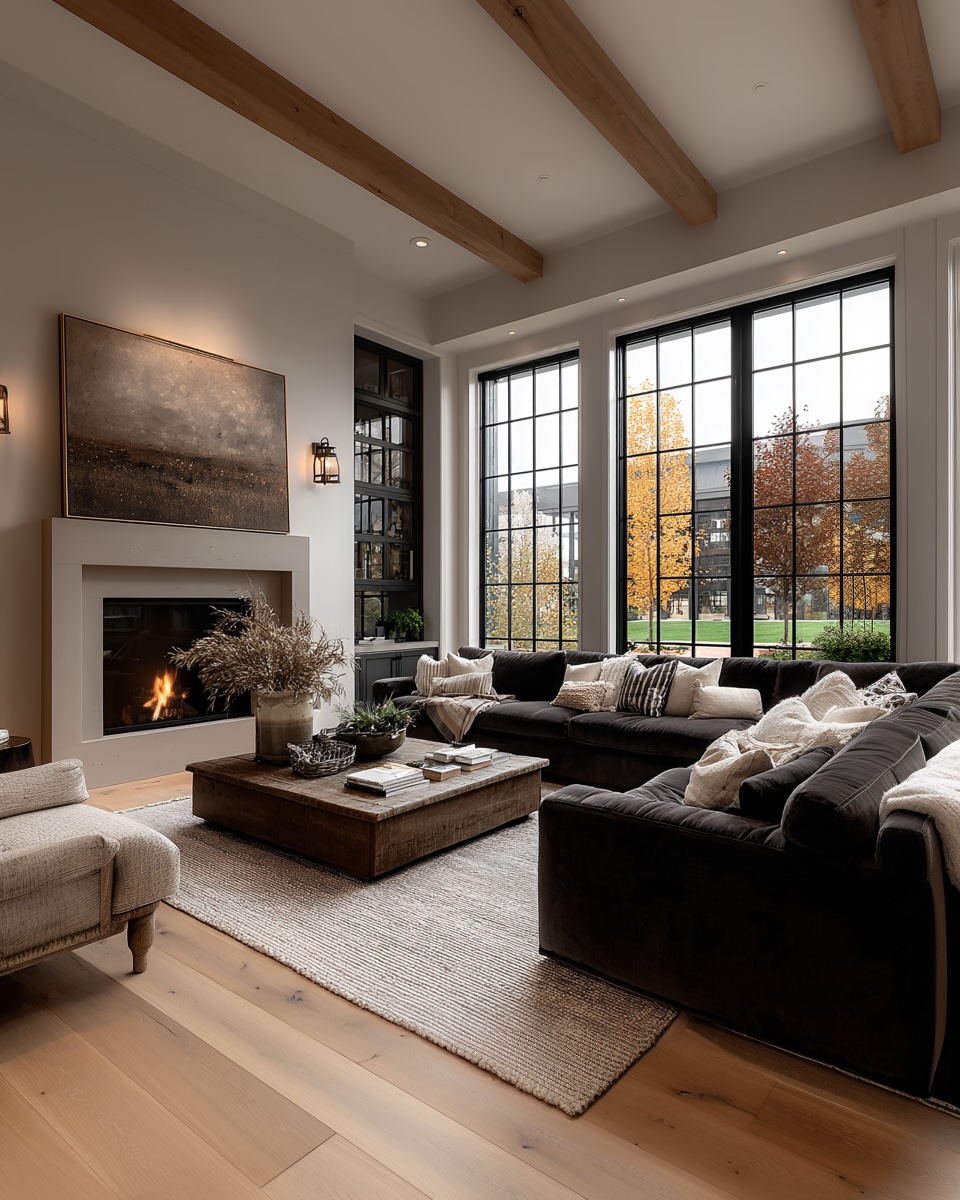
A well-balanced seating arrangement is the foundation of great living room layout design, but this area rug is too small – the chair floats on its own and doesn’t feel like a part of the grouping.
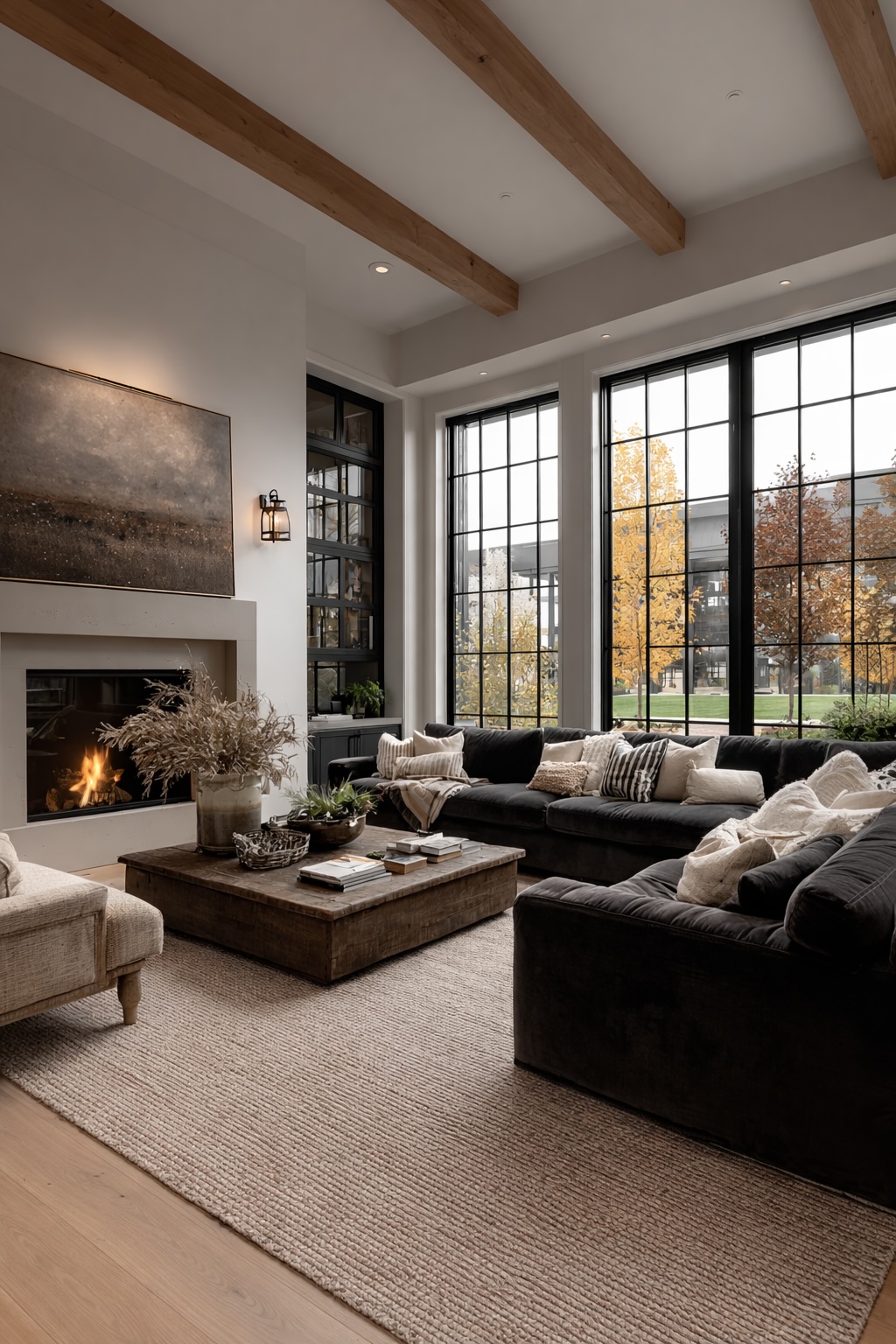
A well-balanced seating arrangement is the foundation of great living room layout design, and this area rug is the perfect size to anchor all furniture and make it feel like a cohesive group.
This Image is an AI Rendering Created by Julie McNicol
Oversized coffee tables can also disrupt a layout. They should allow comfortable movement while still being accessible from every seat. If they are a large as a sofa, for example, the scale feels overwhelming and awkward. The sofa or sectional should be the largest piece in the room.
Television placement often dominates the room as well. When everything faces the TV, conversation becomes secondary. A more balanced interior designer living room layout allows the room to function both as a media space and a social gathering area.
Finally, many layouts lack secondary lighting and visual layering, which makes the space feel flat or unfinished.
Fortunately, these issues are usually easy to correct once the overall layout strategy is reconsidered.
The Importance of Scale and Proportion
One of the most overlooked living room design tips is understanding scale and proportion.
Furniture should relate not only to the room but also to each other. A large sectional paired with tiny accent chairs can make the room feel unbalanced, while several bulky pieces may overwhelm a modest space.
Coffee tables and side tables should also be proportionate to seating. Ideally, a coffee table should be roughly two-thirds the length of the sofa and sit about 16–18 inches away from the seat edge for comfortable access.
Ceiling height matters as well. Rooms with higher ceilings benefit from taller elements—such as bookcases, artwork, or floor lamps—to visually balance the vertical space.
Designers also think carefully about visual weight. For example, if one side of the room contains a substantial sofa, the opposite side might include two lighter chairs rather than another heavy piece.
When scale is thoughtfully considered, the room feels calm, balanced, and intentional

This space feels strange: the coffee table size is overpowering in this space and the chandelier is comically small. Is feels like someone forgot to bring a tape measure with them when they went shopping.
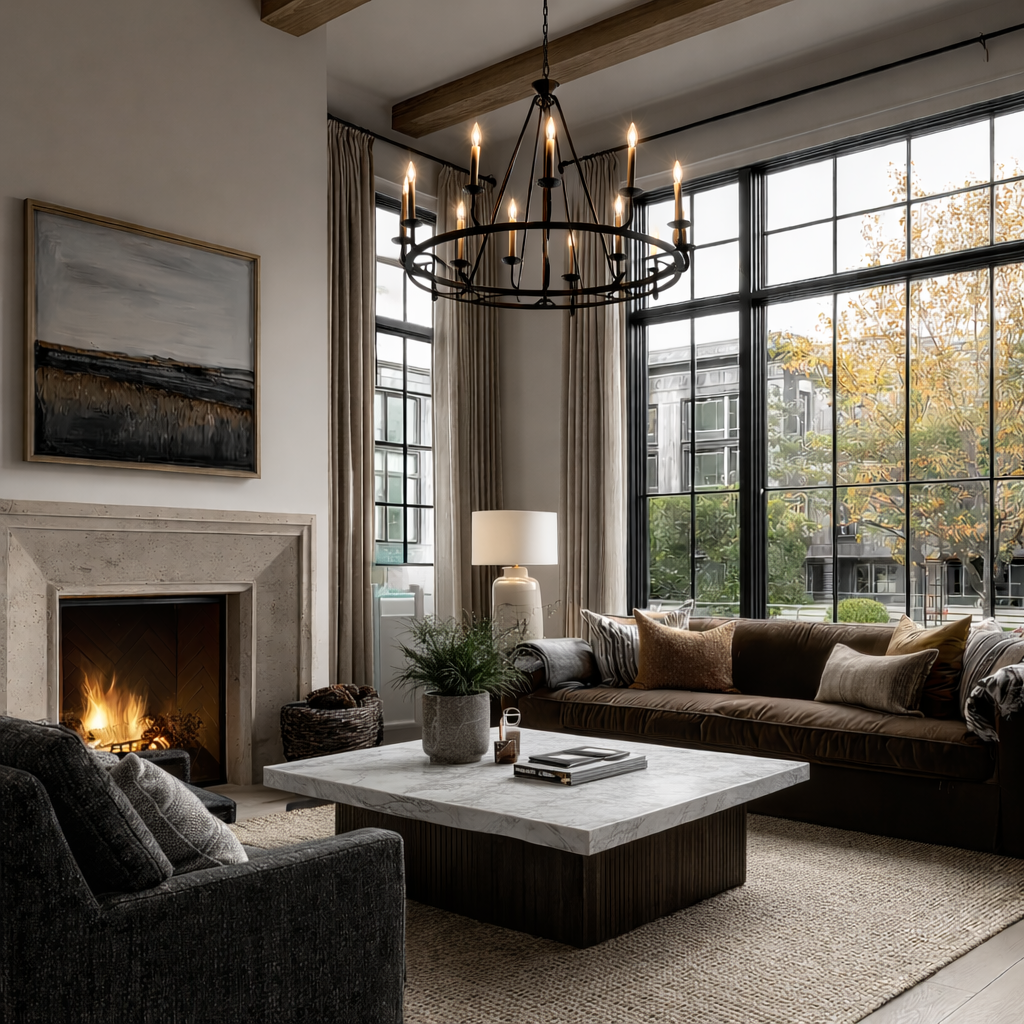
This space feels visually balanced and calm: Scale of coffee table is a great size and scale for the room and the items around it. The chandelier is large enough to make a statement without taking attention away from the other elements in the room.
This Image is an AI Rendering Created by Julie McNicol
How Designers Plan Furniture Layouts
A professional interior designer living room layout almost always begins with zoning.
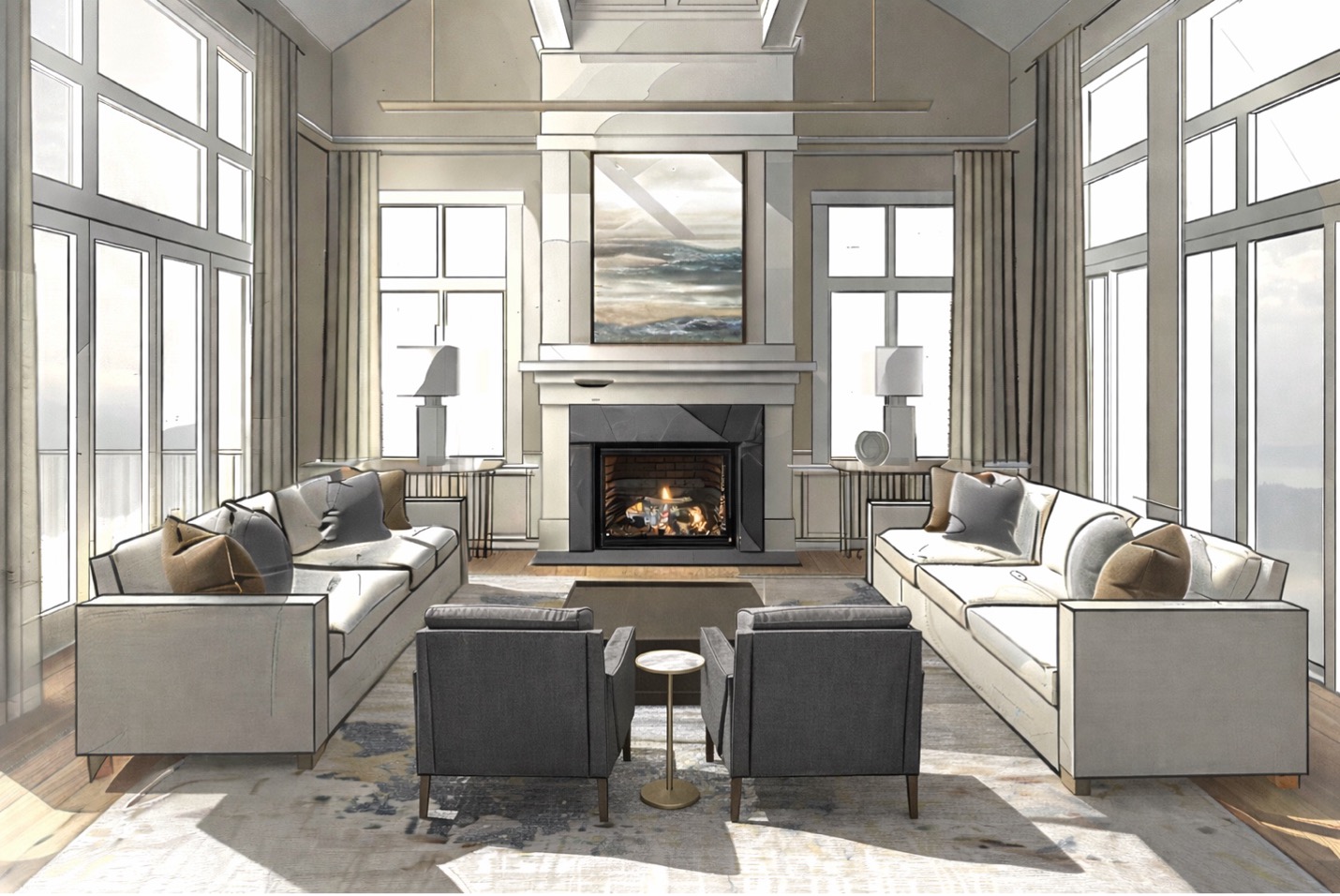
Instead of placing furniture randomly, designers establish functional areas within the room. In most living rooms, the primary zone is a conversation area centered around a sofa and chairs.
The furniture is arranged so that people can comfortably talk without raising their voices. Ideally, seats are within 8–10 feet of each other to maintain a natural conversational distance.
Designers also consider sightlines. For example, someone seated on the sofa should have a comfortable view of the focal point—whether that’s a fireplace, artwork, or television.
Traffic flow is carefully mapped as well. Clear walkways of about 30–36 inches allow people to move easily through the room without disturbing seated guests.
In larger living rooms, secondary zones may be added—perhaps a reading chair near a window or a small writing desk tucked into a quiet corner.
These thoughtful decisions are what transform basic living room layout ideas into spaces that feel cohesive and welcoming.

Arranging furniture around a focal point creates a more welcoming living space.
This Image is an AI Rendering Created by Julie McNicol
Lighting and Layering That Completes the Room
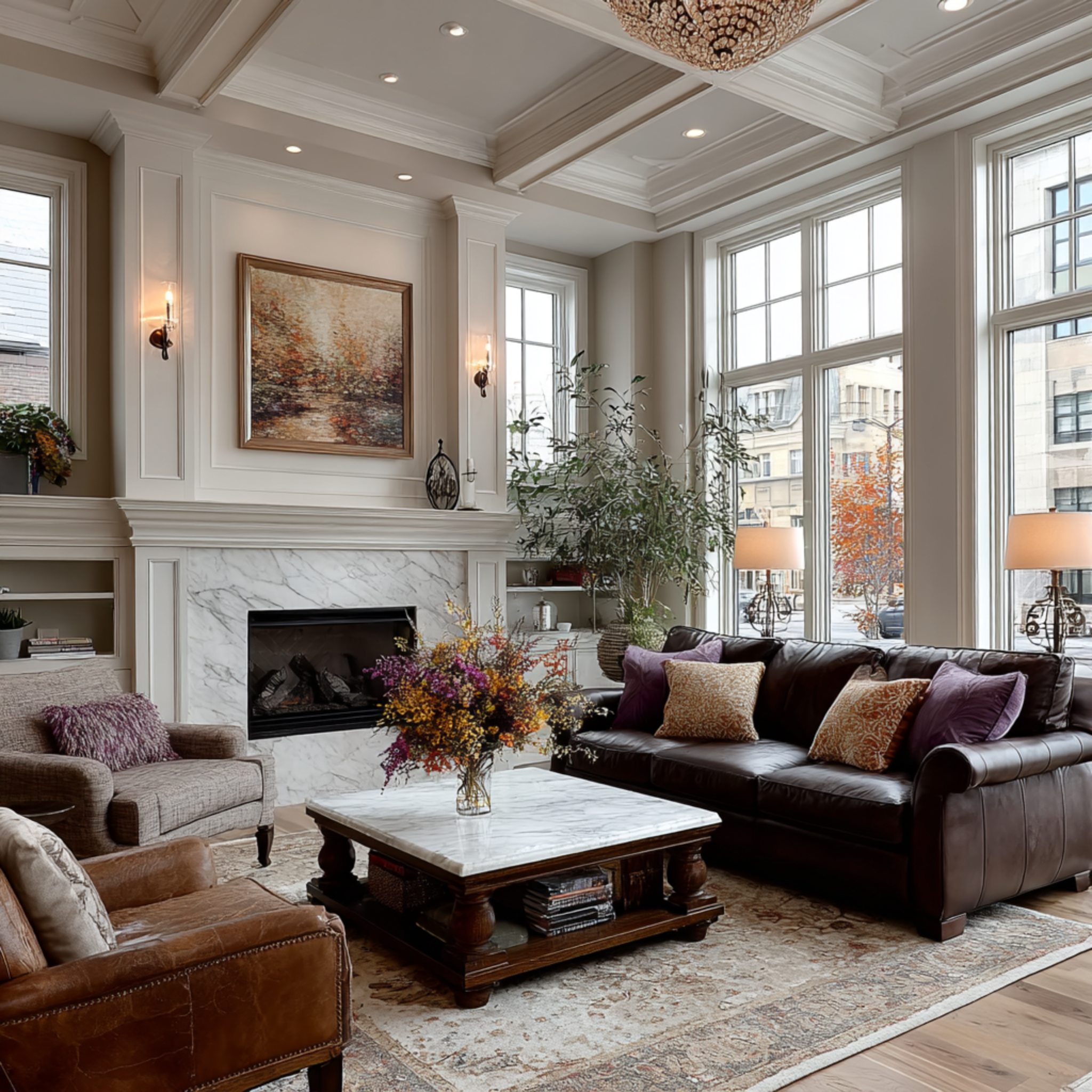
Even the best furniture layout can feel incomplete without proper lighting. Potlights are a great source of general illumination but shouldn’t be the only source. Table Lamps, floor lamps and reading lamps not only add beautiful layers of lighting that create a feeling of warmth, intimacy and comfort, they also add function to the space.
Professional designers approach lighting in layers: ambient, task, and accent.
Ambient lighting provides overall illumination. This may come from ceiling fixtures, recessed lighting, or a statement chandelier.
Task lighting supports specific activities like reading or working. Floor lamps beside seating areas are one of the easiest ways to make a living room more functional.
Accent lighting highlights architectural features, artwork, or decorative objects, adding warmth and visual depth.
Texture and layering also play an important role in finishing the space. Area rugs, throw pillows, and textiles soften the room and help define seating areas.
Artwork and shelving add personality while balancing the room visually.
When lighting and layering are thoughtfully integrated with the furniture arrangement, the room begins to feel polished and complete.

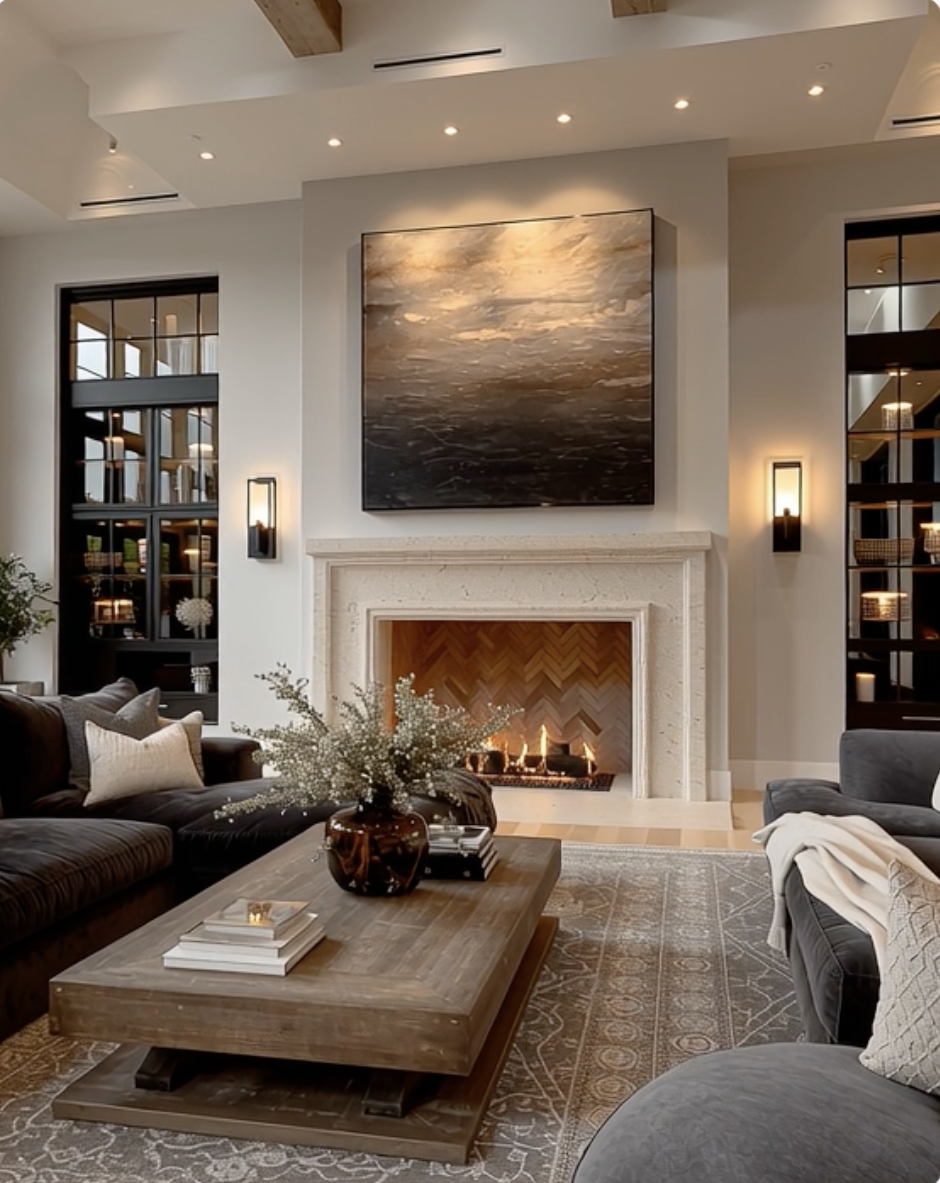
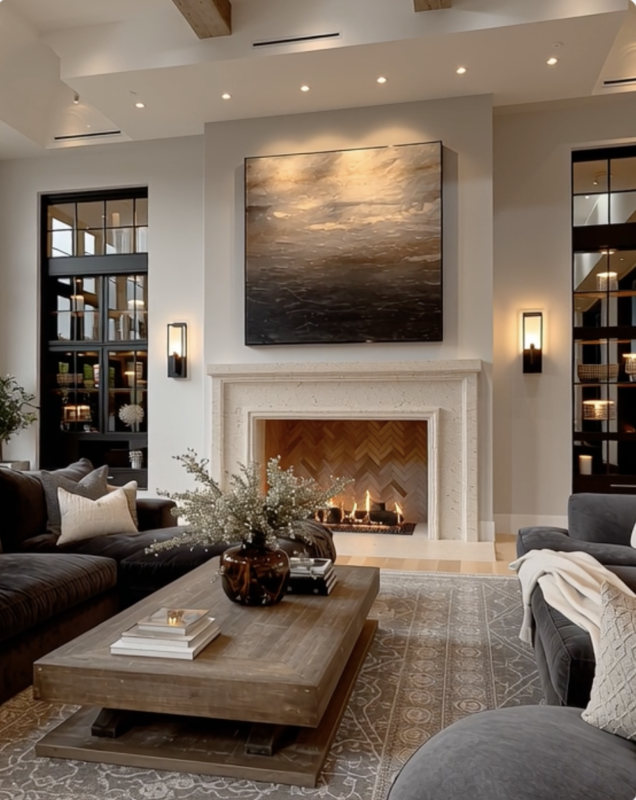
Layered lighting brings warmth and depth to a thoughtfully designed living room. Pot lights, sconces, table lamps and a chandelier allow for increased function in this space while being able to create different visual moods for the space.
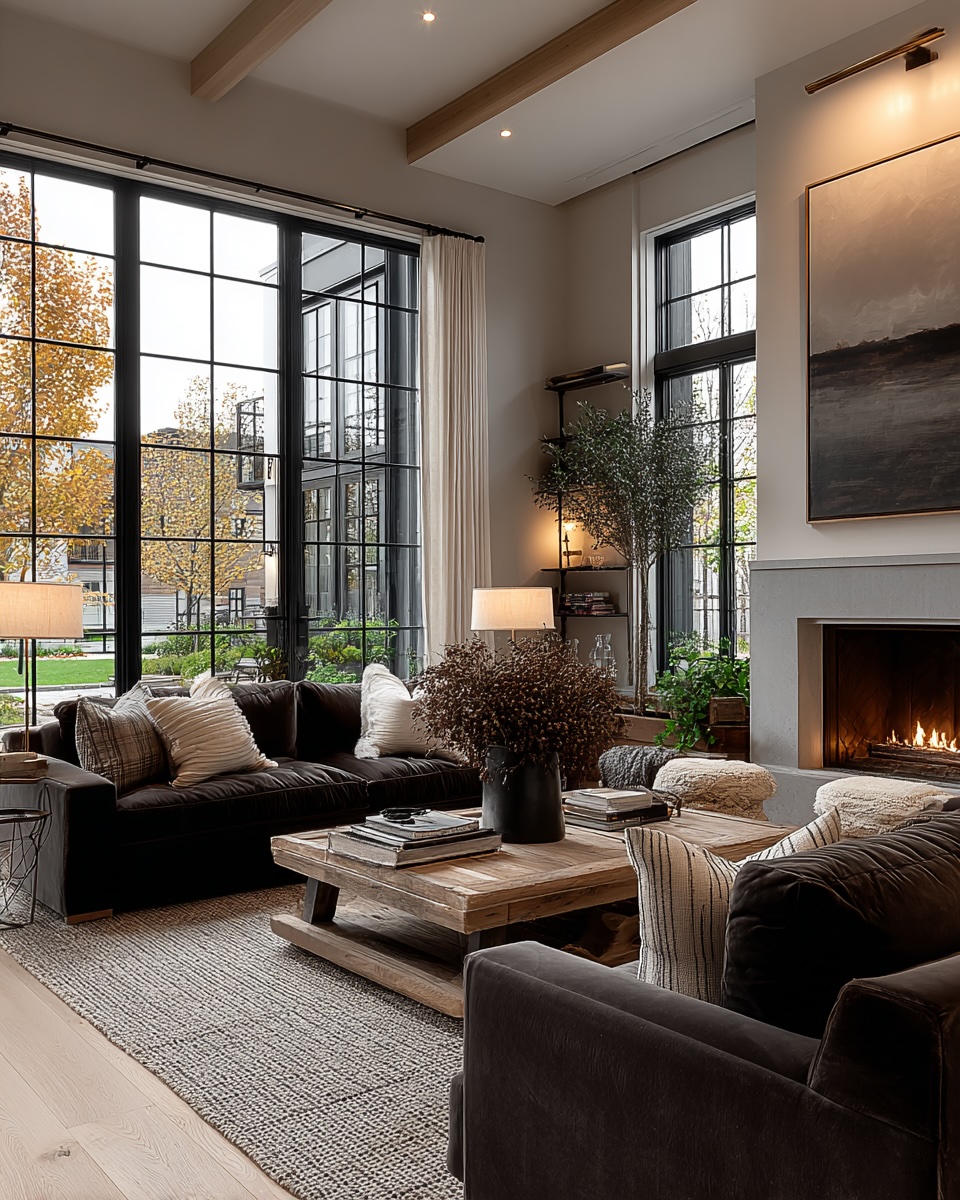
This Image is an AI Rendering Created by Julie McNicol
Designer’s Perspective
After two decades of designing residential interiors, one pattern appears again and again: when a living room doesn’t feel right, the layout is almost always the root of the problem.
Clients often assume they need new furniture or décor, but small adjustments—moving chairs closer together, repositioning the rug, or introducing a better lighting plan—can completely transform the room.
A well-planned layout makes a space feel effortless. It supports conversation, comfort, and everyday living while quietly enhancing the overall design.

Choosing furniture that fits the scale of the room creates a calm, harmonious environment.
This Image is an AI Rendering Created by Julie McNicol
Quick Checklist for Homeowners
When evaluating your living room layout, keep these principles in mind:
• Create a clear focal point for the room
• Arrange seating to encourage conversation
• Avoid pushing all furniture against the walls
• Use an appropriately sized area rug to anchor the layout
• Maintain clear walkways for natural movement
• Balance large furniture pieces with lighter elements
• Add layered lighting for warmth and functionality
• Use accessories and textiles to visually connect the space
FAQ Section
What is the best way to arrange living room furniture?
The best approach is to create a conversation-focused layout centered around a focal point such as a fireplace, window, or television. Seating should be positioned close enough for comfortable conversation while maintaining clear pathways through the room.
What are some simple living room layout ideas for improving flow?
Pulling furniture slightly away from the walls, using an appropriately sized rug, and creating defined seating zones are simple ways to improve a living room layout. These adjustments often make the room feel more cohesive and welcoming.
Why does my living room feel awkward even with nice furniture?
In many cases, the issue is scale, proportion, or furniture placement. When pieces are too large, too small, or poorly arranged, the room can feel unbalanced even if the individual elements are beautiful.
Should all living room furniture face the TV?
Not necessarily. A balanced interior designer living room layout often allows seating to face both the television and other people in the room, so the space works equally well for entertainment and conversation.
How do interior designers plan living room layouts?
Designers typically begin with a floor plan to map furniture placement, circulation paths, and focal points. This allows them to ensure the room functions well while maintaining visual balance and comfort.
Need more Help? Get in touch!
A well-designed living room should feel comfortable, welcoming, and effortless to live in. Often, a thoughtful layout is all it takes to transform a space that feels slightly awkward into one that truly works for your home and lifestyle.
If you’re planning a renovation or simply want to improve how your living room functions, exploring professional design guidance can make the process much easier. You’re always welcome to browse our portfolio for inspiration or book a consultation to discuss how a tailored layout can bring your space together beautifully.